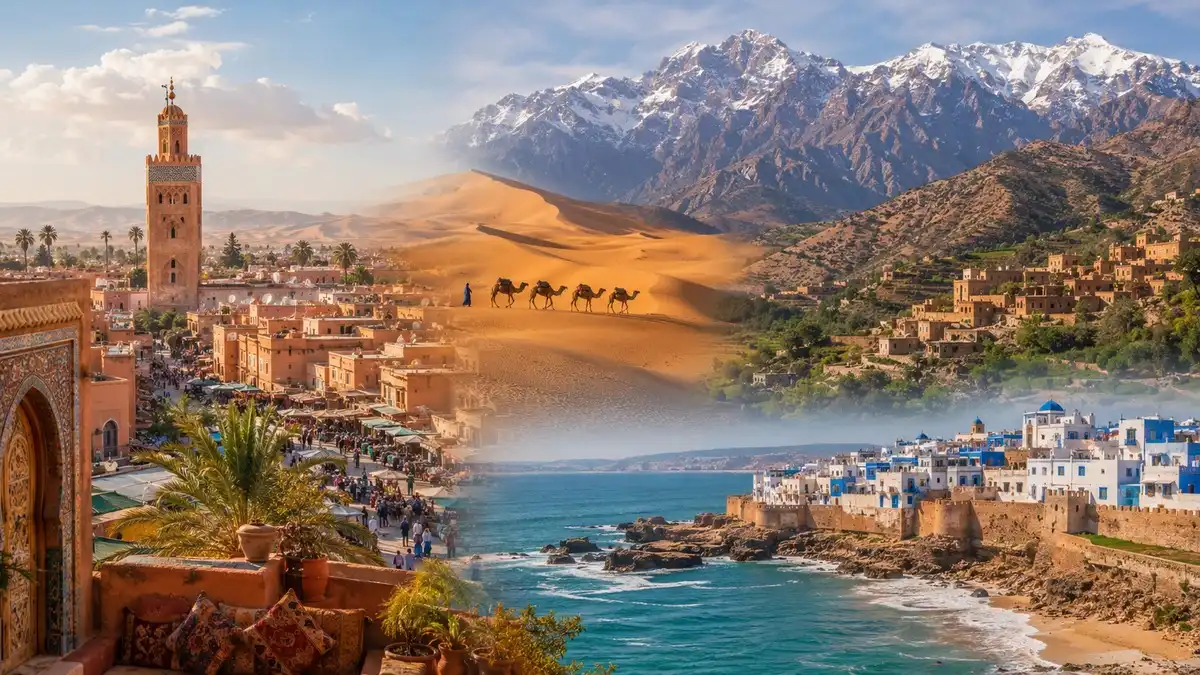
Morocco is one of the most fascinating travel destinations in North Africa, offering a remarkable mix of ancient cities, colorful markets, traditional architecture, breathtaking mountains, and beautiful coastal landscapes.
From the lively streets of Marrakech to the peaceful blue alleys of Chefchaouen, every destination has its own character, culture, and unforgettable experiences.
Whether you are planning a family holiday, a romantic getaway, a cultural adventure, or a photography trip, Morocco has something to suit every type of traveler. Its historic medinas, traditional riads, delicious cuisine, and welcoming atmosphere make exploring the country an experience unlike any other.
In this guide, we explore the most beautiful tourist cities in Morocco, the attractions worth visiting, the best time to travel, and practical tips to help you plan your trip.
1. Marrakech: The Red City of Morocco
Marrakech is one of Morocco’s most famous tourist destinations, known for its red-colored buildings, historic palaces, traditional markets, and lively public squares. The city blends centuries-old traditions with modern hotels, restaurants, gardens, and cultural experiences.
Top attractions in Marrakech
- Jemaa el-Fnaa: The city’s iconic main square, filled with food stalls, performers, and local activity, particularly in the evening.
- Bahia Palace: A beautiful historic palace featuring decorative ceilings, courtyards, and traditional Moroccan architecture.
- Majorelle Garden: A celebrated garden known for its striking blue buildings, exotic plants, and peaceful atmosphere.
- Koutoubia Mosque: One of Marrakech’s most recognizable landmarks, with a distinctive minaret visible from many parts of the city.
- The Medina and souks: A maze of narrow streets where visitors can browse carpets, leather goods, pottery, spices, and handmade souvenirs.
Marrakech is an excellent choice for first-time visitors who want to experience Moroccan culture, traditional cuisine, and vibrant city life. Staying in a riad inside or near the old medina can also provide a memorable introduction to local architecture and hospitality.
2. Chefchaouen: Morocco’s Beautiful Blue City
Chefchaouen is among the most photogenic destinations in Morocco. Nestled in the Rif Mountains, this small city is famous for its blue-painted walls, narrow lanes, flower-filled doorways, and relaxed atmosphere.
Unlike the busy streets of Marrakech, Chefchaouen offers a slower pace that appeals to couples, families, photographers, and travelers looking for peaceful surroundings.
What to see in Chefchaouen
- The Blue Medina: Explore winding streets decorated with different shades of blue, colorful doors, and traditional shops.
- Plaza Uta el-Hammam: The central square, surrounded by cafes and restaurants, is a pleasant place to relax.
- The Kasbah: A historic fortress with a garden and a small museum, offering insight into the city’s past.
- Ras El Maa: A natural water source near the medina where visitors can enjoy a refreshing break.
- The Spanish Mosque viewpoint: A popular spot for panoramic views of the blue city, especially around sunset.
Chefchaouen is ideal for travelers who enjoy walking, photography, and mountain scenery. Comfortable shoes are recommended because many streets are steep, uneven, or paved with stone.
3. Fes: A Journey into Morocco’s History
Fes is one of Morocco’s most important historic cities and a destination for travelers interested in architecture, craftsmanship, and traditional culture. Its ancient medina preserves an atmosphere that feels very different from Morocco’s modern urban centers.
Best places to visit in Fes
- Fes el-Bali: The old medina, famous for its narrow lanes, traditional markets, historic buildings, and workshops.
- Al Quaraouiyine: A historic institution associated with one of the world’s oldest continuously operating educational traditions. Access to interior areas may be restricted.
- Chouara Tannery: A traditional leather-working site where visitors can observe historic dyeing methods from designated viewpoints.
- Bou Inania Madrasa: A notable example of Moroccan Islamic architecture, featuring intricate decorative details.
- The Royal Palace gates: An impressive exterior landmark known for its elaborate doors and decorative tilework.
Fes is particularly rewarding for travelers who want to discover Morocco’s heritage. Hiring a reputable local guide can make exploring the medina easier and help visitors understand its history and traditions.
4. Casablanca: Modern Life and Coastal Views
Casablanca is Morocco’s largest city and a major economic center. It offers a different experience from the country’s traditional imperial cities, with broad avenues, modern buildings, shopping districts, and a lively Atlantic coastline.
Top attractions in Casablanca
- Hassan II Mosque: One of the city’s most impressive landmarks, distinguished by its oceanfront setting and striking architecture. Guided interior visits are available at designated times, subject to current arrangements.
- The Corniche: A coastal area with cafes, restaurants, and places to enjoy views of the Atlantic Ocean.
- Place Mohammed V: A central square surrounded by notable civic architecture.
- Habous Quarter: A district combining traditional Moroccan design with shops selling crafts, books, and local products.
- The old medina: A smaller historic area where visitors can explore local shops and traditional streets.
Casablanca is a good option for travelers interested in contemporary Moroccan life, shopping, dining, and architecture. Many visitors also use it as an arrival or departure point for trips around the country.
5. Rabat: The Elegant Capital City
Rabat combines political importance, historic landmarks, green spaces, and a relaxed coastal atmosphere. It is often less hectic than Marrakech or Casablanca, making it an appealing stop for families and travelers who prefer a calmer city experience.
Must-see places in Rabat
- Kasbah of the Udayas: A historic fortified neighborhood with white-and-blue houses, narrow streets, and ocean views.
- Hassan Tower: An unfinished minaret that has become one of Rabat’s most recognizable monuments.
- Mausoleum of Mohammed V: A notable royal monument featuring traditional Moroccan craftsmanship.
- Chellah: An archaeological and historic site with ancient remains and peaceful gardens.
- Rabat’s coastline: Enjoy a walk near the ocean or explore the city’s waterfront areas.
Rabat is an excellent destination for visitors who want to combine history, culture, and relaxation without the intensity of Morocco’s busiest tourist centers.
6. Essaouira: A Charming Atlantic Coastal Town
Essaouira is a beautiful coastal destination known for its historic fortified walls, fishing harbor, sandy beaches, and artistic atmosphere. Its compact old town makes it easy to explore on foot, while the ocean breeze offers a welcome change from inland cities.
The best attractions in Essaouira
- The Medina of Essaouira: A historic center filled with art galleries, craft shops, cafes, and traditional buildings.
- Skala de la Kasbah: The old sea-facing fortifications provide dramatic views of the Atlantic.
- The fishing port: Watch fishing boats arrive and discover the city’s strong maritime character.
- Essaouira Beach: A long stretch of sand popular for walking, horseback riding in designated areas, and wind-based water sports.
- Local seafood restaurants: Sample freshly prepared fish and other regional dishes.
Essaouira is especially suitable for couples, families, and travelers seeking a relaxed seaside break. Windy conditions are common, so bringing a light jacket can be useful even during warmer months.
7. Tangier: Where the Mediterranean Meets the Atlantic
Tangier occupies a strategic position in northern Morocco, near the meeting point of the Mediterranean Sea and the Atlantic Ocean. Its history, international influences, coastal scenery, and lively cafe culture make it an interesting destination for a city break.
What to explore in Tangier
- The Kasbah: A historic district with traditional architecture, small museums, and scenic views.
- The Medina: A network of old streets with shops, cafes, and local markets.
- Cape Spartel: A scenic coastal headland outside the city, known for its lighthouse and ocean views.
- The Caves of Hercules: A well-known coastal attraction associated with local legends.
- Tangier’s waterfront: A modern area for walking, dining, and enjoying views of the sea.
Tangier is also a practical starting point for exploring northern Morocco, including Chefchaouen and the historic town of Asilah.
8. Agadir: Beaches and Family-Friendly Holidays
Agadir is one of Morocco’s best-known beach destinations. With a long sandy shoreline, modern resorts, seaside restaurants, and a wide range of activities, it appeals to families, couples, and travelers looking for a relaxing holiday.
Best things to do in Agadir
- Agadir Beach: Enjoy the broad sandy beach and its promenade.
- Agadir Oufella: Visit the hilltop remains of the historic kasbah for panoramic views over the city and bay.
- Souk El Had: Browse a large traditional market selling produce, spices, clothing, and household goods.
- The marina: Explore restaurants, cafes, and waterfront walking areas.
- Paradise Valley: Take a day trip into the surrounding countryside to discover rocky landscapes and natural pools, depending on weather and water conditions.
Agadir is particularly convenient for travelers who want resort-style accommodation and easy access to beach activities. For families, it can provide a comfortable base with a mixture of relaxation and excursions.
9. Meknes: A Historic Imperial City
Meknes is one of Morocco’s historic imperial cities and offers an appealing combination of monumental gates, traditional streets, and architectural heritage. It can be a quieter alternative to more heavily visited destinations.
Places to visit in Meknes
- Bab Mansour: A monumental gate admired for its scale and decorative details.
- Heri es-Souani: Historic granaries and storage structures associated with the city’s royal past.
- The old medina: Explore local shops, traditional markets, and historic streets.
- Place El Hedim: A central square that provides a lively introduction to everyday city life.
- Moulay Idriss Zerhoun: A nearby hill town with important religious and historical significance.
Meknes is a good choice for history lovers and travelers interested in discovering Morocco beyond its most famous tourist cities.
10. Ouarzazate: The Gateway to the Desert
Ouarzazate lies in southern Morocco, near dramatic mountain landscapes, desert routes, and historic fortified villages. It is a popular base for travelers exploring the country’s cinematic landscapes and the routes leading toward the Sahara.
Top attractions around Ouarzazate
- Ait Benhaddou: A remarkable fortified earthen settlement recognized for its traditional architecture and dramatic setting.
- Taourirt Kasbah: A historic complex that reflects the architectural heritage of southern Morocco.
- Atlas Film Studios: A film-production site associated with numerous international productions; visiting arrangements vary.
- Draa Valley: A scenic region of palm groves, villages, and traditional settlements.
- Desert excursions: Ouarzazate can be included in longer trips toward desert destinations such as Merzouga, although the journey requires additional travel time.
Ouarzazate is especially attractive to photographers, road-trip enthusiasts, and travelers interested in landscapes and traditional architecture. Summer temperatures can be very high, so outdoor activities are often more comfortable in the morning or late afternoon.
11. Ifrane: A Different Side of Morocco
Ifrane stands out for its cooler climate, green spaces, tidy streets, and architecture that differs from the traditional image many visitors associate with Morocco. Located in the Middle Atlas region, it is a pleasant stop for families and nature lovers.
Things to do in Ifrane
- Ifrane National Park: Explore forested landscapes and natural surroundings in the wider region.
- Day trips into the Middle Atlas: Enjoy scenic drives, mountain air, and seasonal outdoor activities.
- Local parks and gardens: Relax in green spaces around the town.
- Nearby cedar forests: Visit forest areas around Azrou, where Barbary macaques may sometimes be seen. Observe wildlife from a respectful distance and never feed it.
Ifrane is particularly appealing during the warmer months, while winter may bring snow and colder conditions. Travelers should check road and weather conditions before planning mountain excursions.
12. Asilah: Art, Whitewashed Streets, and Ocean Views
Asilah is a small coastal town south of Tangier, known for its whitewashed buildings, artistic murals, historic walls, and peaceful atmosphere. It is a lovely destination for a short stop or a relaxing overnight stay.
What makes Asilah special?
- The old medina: Wander through clean, narrow streets decorated with colorful doors and artwork.
- Historic ramparts: Walk along sections of the old walls and enjoy views of the Atlantic.
- Local art: Discover murals and galleries that reflect the town’s creative character.
- Nearby beaches: Spend time along the coast, taking local conditions and swimming safety into account.
Asilah is well suited to couples, photographers, and travelers looking for a quieter alternative to larger Moroccan cities.
The Best Time to Visit Morocco
The best time to visit Morocco depends on the cities you plan to explore and the type of holiday you prefer.
Spring: March to May
Spring is one of the most comfortable seasons for exploring Marrakech, Fes, Rabat, and other inland destinations. Temperatures are often pleasant for sightseeing, and many landscapes become greener after the winter months.
Autumn: September to November
Autumn is another excellent period for city tours, cultural visits, and road trips. Temperatures generally become more comfortable after the summer heat, although weather varies by region.
Summer: June to August
Summer is suitable for coastal destinations such as Essaouira, Tangier, and Agadir, although inland cities and desert areas can become extremely hot. Mountain destinations may offer cooler conditions, but popular areas can be busy.
Winter: December to February
Winter can be a good time to explore cities and enjoy quieter travel periods. However, mountain regions may experience snow, and nights in inland and desert areas can be cold. Coastal weather is generally milder but can be rainy or windy.
For travelers visiting several regions, spring and autumn are often the most convenient choices.
How Many Days Do You Need to Explore Morocco?
The ideal length of a Moroccan holiday depends on your interests, travel pace, and transportation plans.
- 3 to 4 days: Focus on one city, such as Marrakech, Fes, or Tangier.
- 5 to 7 days: Combine two or three destinations, such as Marrakech, Casablanca, and Rabat, or Tangier, Chefchaouen, and Fes.
- 8 to 10 days: Explore a broader route that includes Marrakech, Fes, Chefchaouen, and one coastal destination.
- 12 to 14 days: Consider a more extensive itinerary combining imperial cities, coastal towns, the Atlas Mountains, and southern Morocco.
Morocco is larger than it may appear on a map, and journeys between regions can take several hours. Avoid scheduling too many destinations into a short trip.
Suggested 7-Day Morocco Itinerary
If you are visiting Morocco for the first time, the following itinerary combines culture, historic architecture, and the famous blue streets of the north.
Day 1: Marrakech
Explore Jemaa el-Fnaa, the souks, and the historic medina.
Day 2: Marrakech
Visit Bahia Palace and Majorelle Garden, leaving time to enjoy traditional Moroccan food.
Day 3: Casablanca and Rabat
Travel north and visit Hassan II Mosque in Casablanca, then continue to Rabat if your schedule allows.
Day 4: Fes
Explore Fes el-Bali and discover the city’s traditional crafts and historic buildings.
Day 5: Chefchaouen
Travel to the Blue City and spend the afternoon exploring its medina.
Day 6: Chefchaouen
Visit the Kasbah, walk to a scenic viewpoint, and enjoy the relaxed mountain atmosphere.
Day 7: Tangier
Continue to Tangier for a walk through the medina and along the waterfront before departure, depending on your transport arrangements.
This route involves considerable travel, especially between Marrakech and northern Morocco. If you prefer a slower holiday, spend more time in fewer cities or use train services where available and suitable.
Travel Tips for Visiting Morocco
A little preparation can help make your Moroccan holiday more comfortable and enjoyable.
- Choose your route carefully: Distances between major destinations can be substantial, so check travel times before booking accommodation.
- Dress comfortably and respectfully: Lightweight clothing is useful in warm weather, while a layer is helpful for cooler evenings and mountain areas.
- Carry some local currency: Moroccan dirhams are useful for small purchases, markets, taxis, and places that may not accept cards.
- Agree on taxi fares when necessary: Confirm the fare or make sure the meter is being used before starting your journey.
- Respect local customs: Ask permission before photographing people, particularly in markets and residential areas.
- Try traditional Moroccan food: Popular dishes include tagine, couscous, pastilla, harira, and mint tea.
- Keep valuables secure: Use normal precautions in crowded markets, transport hubs, and busy tourist areas.
- Book popular accommodation early: Well-located riads and coastal hotels can fill quickly during busy travel periods.
- Check seasonal conditions: Mountain roads, desert excursions, and outdoor attractions may be affected by weather.
- Use a reliable guide when helpful: A knowledgeable local guide can add context to historic medinas and make complicated routes easier to navigate.
Frequently Asked Questions About Tourism in Morocco
What are the most beautiful cities to visit in Morocco?
Marrakech, Chefchaouen, Fes, Casablanca, Rabat, Essaouira, Tangier, and Agadir are among the country’s most appealing destinations. The best choice depends on whether you prefer history, beaches, mountain scenery, or traditional city life.
Is Chefchaouen worth visiting?
Yes. Chefchaouen is famous for its blue-painted streets, mountain setting, and relaxed atmosphere. It is especially attractive to photographers, couples, and travelers who enjoy walking through historic neighborhoods.
Which Moroccan city is best for families?
Agadir is a strong choice for families seeking beaches and resort accommodation. Marrakech and Rabat are also good options for cultural sightseeing, while Chefchaouen appeals to families who enjoy slower-paced exploration and mountain scenery.
What is the best city in Morocco for couples?
Marrakech is popular for its traditional riads, gardens, and romantic dining experiences. Essaouira is ideal for a relaxed coastal break, while Chefchaouen offers scenic streets and beautiful viewpoints.
Is Morocco expensive for tourists?
Morocco can suit a range of budgets. Travelers can choose affordable guesthouses and local restaurants or spend more on boutique riads, private tours, and luxury resorts. Costs depend on the season, destination, accommodation, and transportation.
Can you visit Marrakech and Chefchaouen on the same trip?
Yes, but they are far apart. It is best to allow enough time for travel and consider including other destinations along the way. Travelers with limited time may find it more comfortable to focus on either southern Morocco or the northern cities.
What should I wear when visiting Morocco?
Comfortable, breathable clothing is suitable for most trips. Clothing that covers the shoulders and knees is a practical choice for visiting religious or traditional sites. Bring warmer layers for mountain areas and cooler evenings.
Is Morocco suitable for nature lovers?
Absolutely. Beyond its cities, Morocco offers the Atlas and Rif Mountains, Atlantic beaches, cedar forests, valleys, and desert landscapes. Destinations such as Ifrane, the Draa Valley, and the areas around Ouarzazate provide opportunities to explore the country’s natural diversity.